
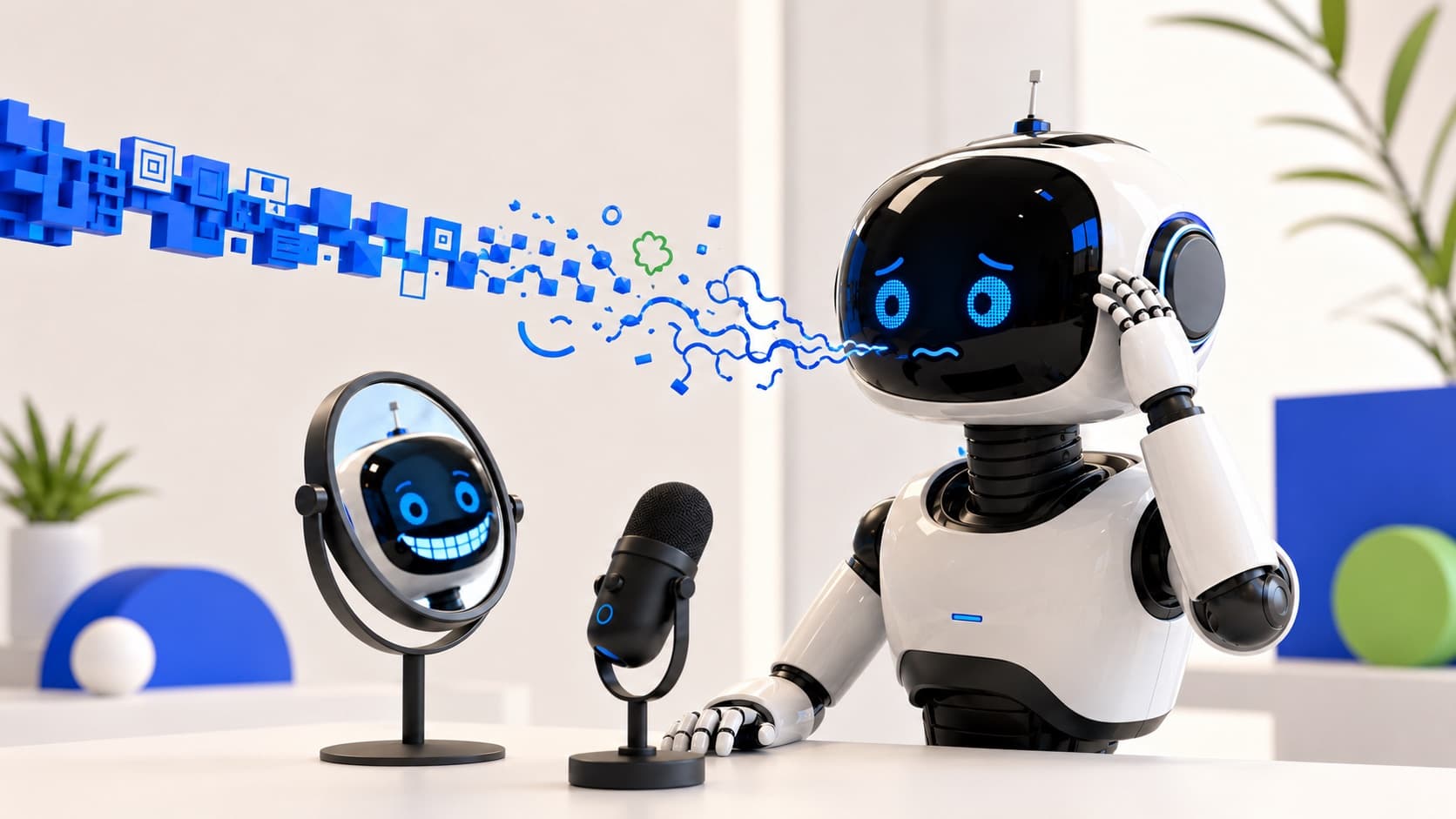
Open LinkedIn for five minutes and you'll notice something strange. Everyone sounds like the same person. The posts are polished. The captions are structured. The advice is technically correct. It's also becoming impossible to remember who wrote any of it. AI made content easier to create. It made originality harder to recognize.
Your audience noticed.
Useful is no longer enough. People also want to know whether a real person is behind the words.
People Are Losing Interest in AI-Generated Content
In 2023, 60% of surveyed consumers preferred generative AI creator content over traditional creator content. By 2025, that figure had fallen to 26%, according to research cited by Digiday.
That's not a dip. That's a collapse.
The decline reflects something many people already feel. Audiences have become more skeptical of content that appears automated or interchangeable. When someone reads a post that sounds like it was generated in 45 seconds, they assume it was.
Digiday described authenticity and human “messiness” as increasingly valuable in a market oversaturated with AI-generated content.
The platforms are responding. In March 2026, LinkedIn announced changes designed to reduce repetitive posts and engagement bait. The platform said it would show more genuine insight and thoughtful perspectives. The shift reflects what audiences were already signaling.
For businesses, this is more than a content problem. If your posts sound like everyone else's, customers have no reason to remember you. Your perspective becomes part of how people decide whether to trust your business.
Why Everyone Suddenly Sounds the Same
This isn't because AI writes poorly. It's because AI writes predictably.
Large language models generate responses by predicting likely sequences of words based on patterns learned from enormous amounts of data. Ask thousands of people to write a LinkedIn post about the same topic. Many will receive polished variations of the same idea.
Different prompts.
Same average.
AI can improve your writing.
It cannot decide what you should have to say.
That's why so much content feels interchangeable. It's grammatically correct, well structured, and optimized to sound credible. But it rarely surprises you. It rarely challenges you. And it almost never feels like it could have come from only one person.
What Generic AI Content Sounds Like
AI does not have to write badly to sound generic. It often writes correctly and consistently. That is exactly the problem.
AI content is optimized for plausibility. It hits all the right topic words. It's formatted well. But it often avoids saying anything uncomfortable. It can imitate a point of view without having the experience that produced it. The result may sound credible without feeling earned.
It says everything correctly and nothing memorably.
Here's the difference.
AI:
“Great leaders empower their teams, embrace change, and prioritize continuous improvement.”
Human:
“A founder I worked with spent months redesigning their website before talking to a single customer. One conversation changed the homepage more than six months of design work.”
Both are grammatically correct.
Only one feels like it was earned.
What Your Experience Adds That AI Cannot
The difference is lived specificity.
“One customer conversation completely changed how we described the business.” lands differently than “small changes can have a big impact.” One comes from a real experience. The other could have been written by anyone. Your audience can feel the difference.
AI can generate an opinion.
It cannot earn one.
It can summarize existing perspectives and present them convincingly. But a point of view formed through real decisions carries something different. It has consequences behind it.
A founder I worked with told me his first bad hire cost him more time than his first failed product. He could recover from a failed idea. Recovering from the wrong person took nearly a year.
That kind of judgment comes from consequences. It develops when you make a decision and live with the result. The perspective is earned, not generated.
Your timing matters too.
Your strongest idea may come from a recent client meeting. It might come from something you noticed while running your business. AI cannot use that context unless you provide it.
The closer your content is to what you are experiencing now, the harder it becomes to imitate.
Here's the counterintuitive part: messiness builds credibility.
For years, creators tried to make everything look perfect.
Now excessive polish can create distance. A failed experiment feels human. So does admitting you were wrong. These moments build trust because they reveal the person behind the content.
How to Use AI Without Becoming It
AI is a useful tool. It should sharpen your thinking, not replace it.
Use AI to develop your ideas. Do not let it erase your voice.
Start with your own observation. Give AI the raw material instead of asking it to invent the idea.
Tell it what happened. Explain what you believe. Include the details that shaped your conclusion. Then use AI to clarify the writing without handing over the thinking.
Try prompting AI this way:
“Here is what happened and what I think it means. Help me make the writing clearer. Keep my point of view. Do not add examples or conclusions I did not provide.”
What to Publish Instead
Take a clear position. Safe observations disappear into the feed. A real point of view gives people something to remember.
Show how you reached a decision. The thinking behind the outcome is often more valuable than the polished result.
The format does not need to be elaborate. A direct video filmed on your phone may create more connection than content polished until no personality remains.
The Only-You Test
Read your last five posts. Find every claim that could have been written by someone else. Replace it with a real example or a lesson you earned.
Before you publish your next post, ask one question:
Could a hundred other people have written this exact post?
If the answer is yes, keep rewriting.
AI lowered the barrier to creating content. It did not lower the barrier to having something worth saying.
Writing became abundant. Original thinking became scarce.
Everyone has access to AI.
No one else has access to your story.
Continue Learning
How to Build a Founder Brand in 30 Minutes a Week

Emily Kosko
Business & Brand Strategist