
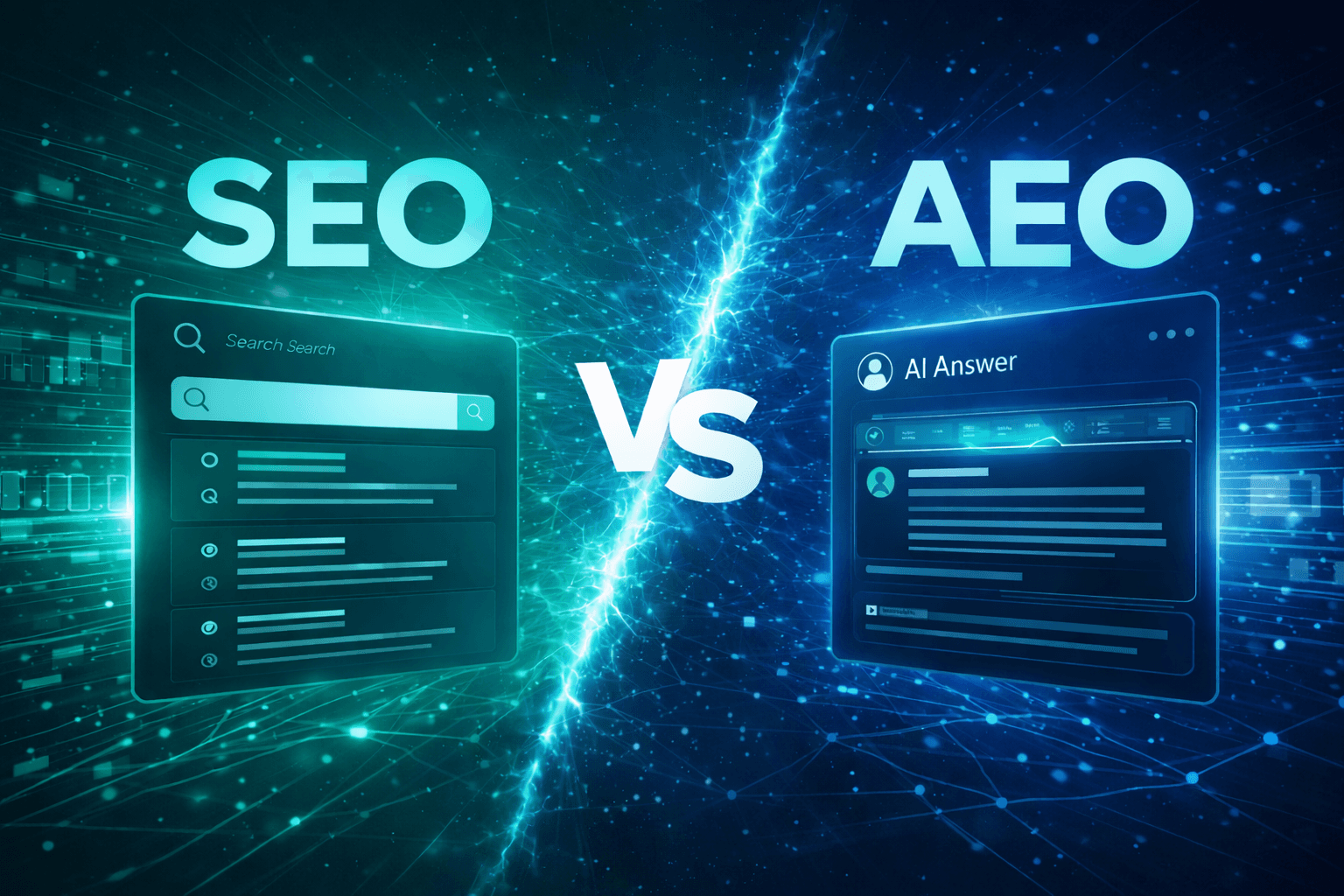
“Google it” is becoming a thing of the past. Search behavior has already changed. Most businesses just haven't caught up yet. People aren't typing keywords into Google anymore. They're asking AI tools like ChatGPT and getting direct answers. No scrolling. No clicking. Just answers.
And where attention goes, businesses must follow.
That's why traditional SEO alone is no longer enough. A new discipline has emerged: AEO, AI Engine Optimization, also called Answer Engine Optimization. While SEO focuses on ranking in search results, AEO focuses on something more powerful: getting your brand cited as the answer by AI engines like ChatGPT, Google Gemini, and Claude.
Why is it so important?
The stakes are real. One study out of UC San Diego found that 84% of users expressed purchase intent after reading AI-generated summaries, compared to just 52% for original reviews. That gap isn't a rounding error. It's a fundamental shift in how trust is built and how buying decisions are made.
When your brand appears in an AI-generated response, you're not just another result. You're the authority. You're the source. You're the answer.
So how do you get there?
1. Community Signals Are Now Currency
Here's something most businesses haven't caught up to yet: AI engines don't just pull from your website. They pull from everywhere, and community-generated content carries serious weight.
Businesses with a higher volume of Google reviews are showing up more frequently in ChatGPT responses. Not just positive reviews, volume matters. The more real people talking about your brand, the more signal AI engines have to work with.
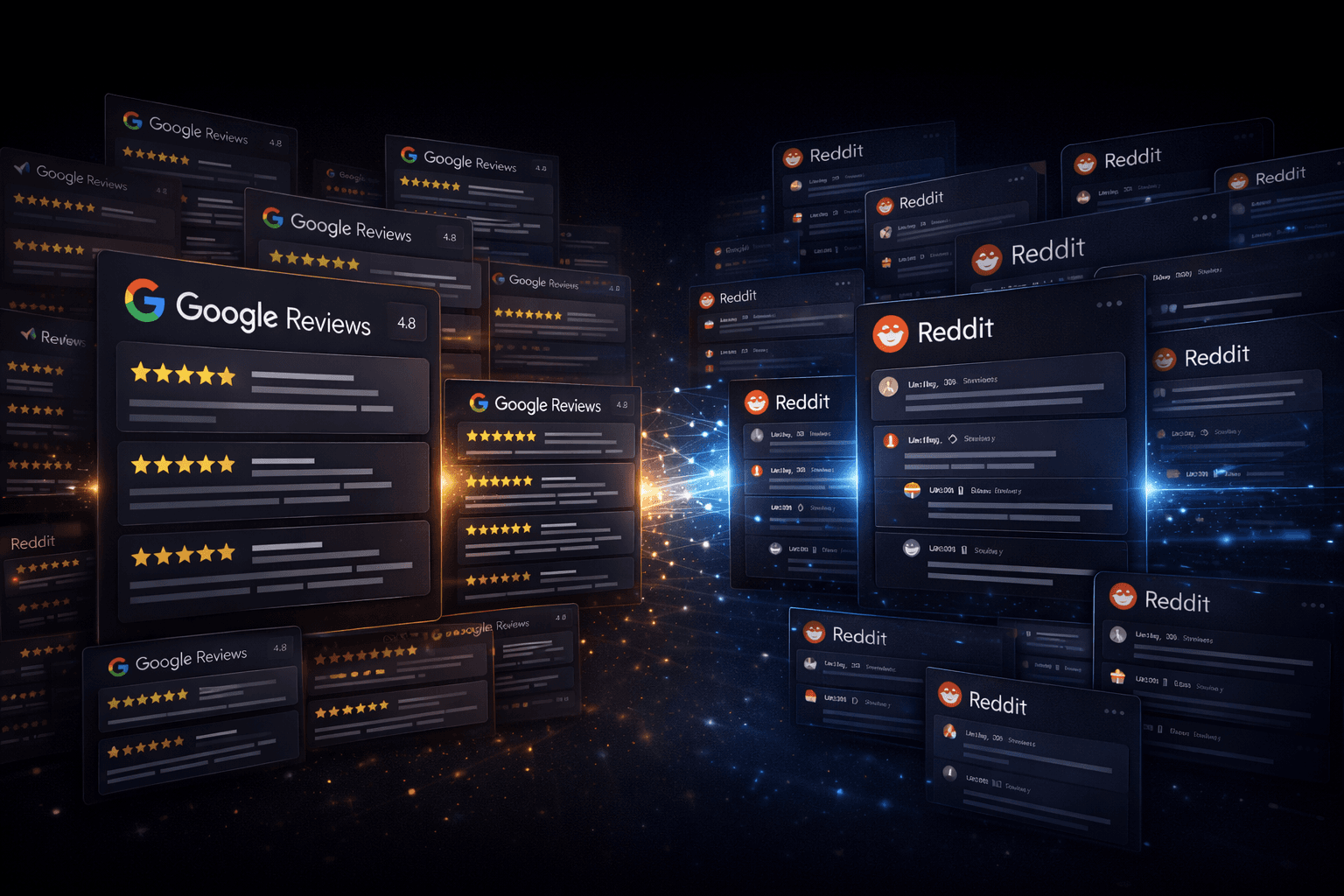
Reddit is another major source. AI models treat Reddit as a credible proxy for genuine consumer opinion, precisely because it's hard to fake. When someone wants to know if a business has real customers or real followers, they check Reddit, not your homepage. That means your brand reputation in community spaces is now a direct input into whether AI recommends you.
The playbook: Actively encourage reviews. Engage authentically in relevant online communities. Treat your Reddit presence as an extension of your brand.
For example, search something like “best project management tool for small teams” in ChatGPT and you'll notice the same names appear repeatedly. Notion. ClickUp. Asana. That's not random. Those brands have built strong signals across content, reviews, and communities, increasing their chances of being cited.
2. Think Beyond Google
SEO conditioned us to treat Google as the only game in town. AEO changes that.
AI doesn't choose one search engine. It pulls from all of them.
Large language models pull from multiple sources, including Bing, which powers Microsoft Copilot and several other major AI tools. Optimizing only for Google now means leaving citations on the table. Think about it this way: if you've been ignoring Bing because it felt irrelevant, you've inadvertently been invisible to an entire ecosystem of AI tools your customers are already using. A more holistic approach to search presence isn't just a nice-to-have anymore. It's the foundation of an effective AEO strategy.
3. Write Conversationally, Think Long-Tail
The way people search has fundamentally changed, and it's changed in two connected ways: the language is more casual, and the queries are much longer.
In traditional SEO, someone might type: “best pizza near campus.” On an AI engine, that same person asks: “What's the best pizza spot near UCLA that's open late and won't break a college budget?” Same intent, completely different language, and your content needs to answer the second version.
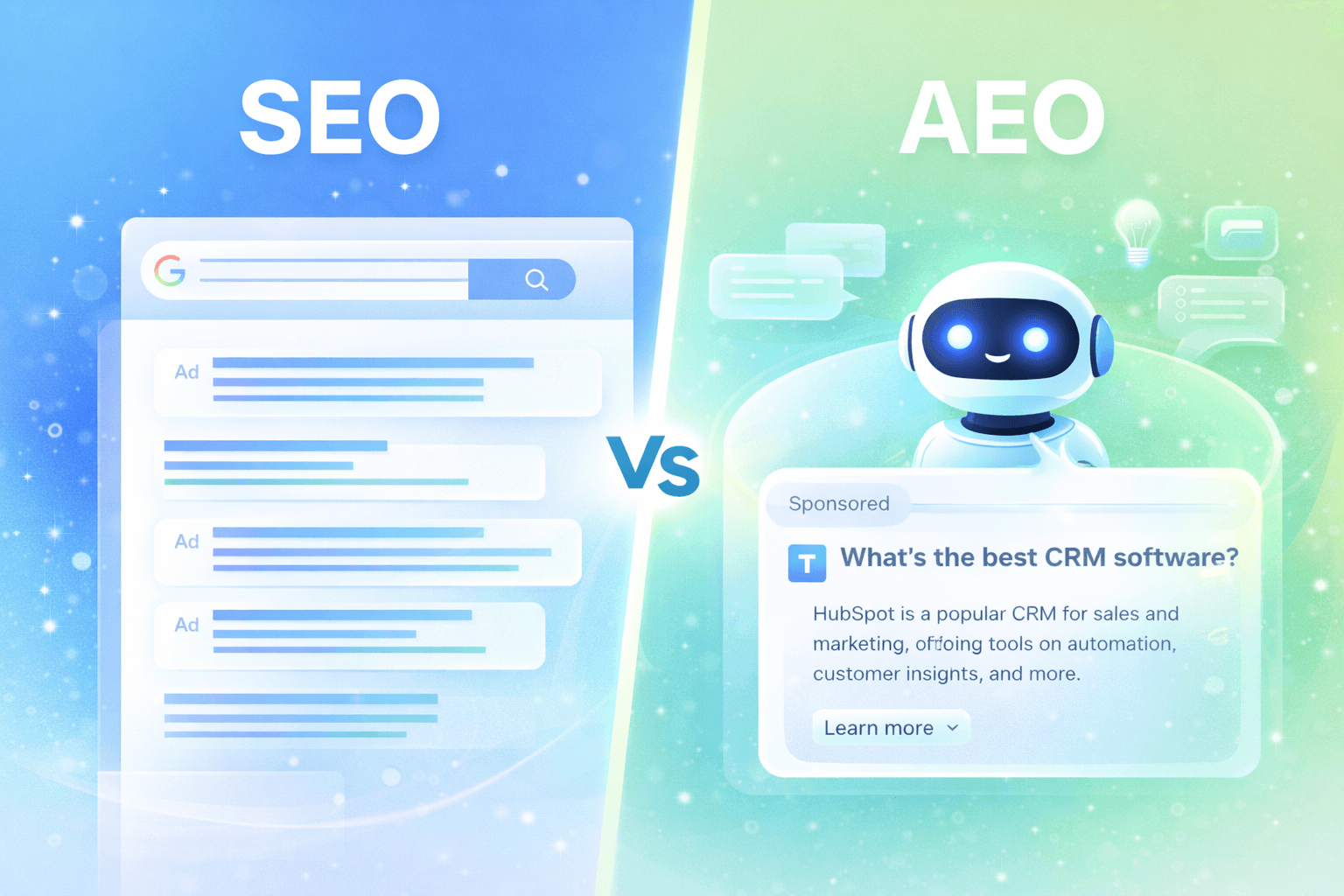
Short keywords are fading. Long questions are taking over.
This shift is partly driven by voice-to-text. Speaking is significantly faster than typing, so people are fitting full, conversational questions into their AI prompts. The average Google search runs just 3 to 4 words. The average AI platform query runs 11 or more. That gap tells you everything.
So stop optimizing for keywords and start optimizing for questions. Think FAQ sections, blog posts written in a natural Q&A format, and language that mirrors how your actual customers speak. The brands showing up in AI responses aren't stuffing keywords. They're answering real questions the way a knowledgeable friend would.
4. Structure Your Content to Be Answer-Ready
Writing conversationally is only half the battle. You also need to structure your content so AI engines can actually find and use it.
An AEO-optimized page leads with short, direct answers to the questions your audience is already asking, then follows with deeper context and explanation. Think of it like a pyramid: give the answer first, then support it. AI engines are scanning for clear, extractable responses, and the easier you make it for them, the more likely your content gets cited.
Start by identifying which questions and phrases are driving traffic to your target keywords. Then build pages around those questions, with the answer front and center. Headers framed as questions, concise opening sentences, and structured formatting aren't just good for readers. They're signals that AI engines are trained to recognize.
5. Build Credibility Now, Before the Ads Arrive
ChatGPT is already rolling out ads for free-tier users. That means the line between organic AI citations and paid placement is about to get blurry, and it's going to happen faster than most people expect.
If that sounds familiar, it should. Google went through the exact same transition in the early 2000s. The businesses that had already built credibility and content before paid competition flooded in were the ones that held their ground. The ones that waited got drowned out.
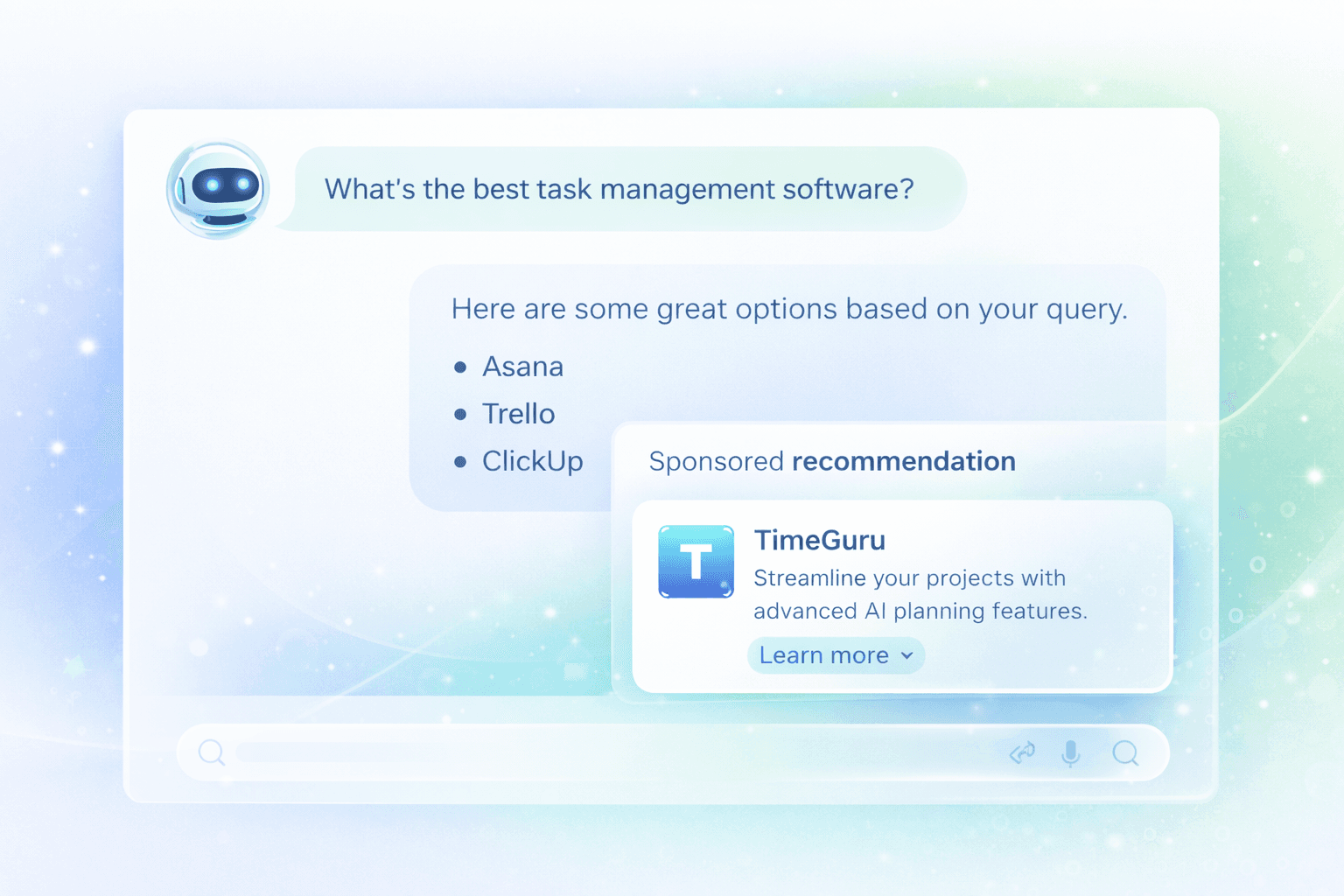
The future of ads isn't louder. It's smarter.
AEO is at that same inflection point right now. The organic window is open, but it won't stay open forever. Every review you earn, every community you show up in, every question you answer today is credibility that no ad budget can instantly replicate. That's your competitive advantage, and it's available right now to anyone willing to move first.
The Window Is Open. For Now.
AEO is still early. The playbook is still being written, and most of your competitors haven't even heard the term yet. That's the opportunity. Search has shifted before and the businesses that adapted first were the ones that won. This is that moment again, just playing out on a new battlefield.
Start with the simplest signal you can build today: your Google review count. Reach out to your last ten customers this week and ask. That's your first move. Then show up in the communities where your audience already lives and start answering the questions they're already asking. Because the brands that become the answer today will be the ones that are impossible to ignore tomorrow.
Related Reading
Ready to See How Visible Your Business Is to AI?
Understanding AEO is the first step. The next step is finding out whether AI tools can actually discover, understand, and recommend your business. Read the AEO Visibility Checklist: Is Your Business Ready for AI Search? to evaluate your current visibility and identify the areas you need to improve.

Emily Kosko
Business & Brand Strategist